
Automatic Gate Openers & Access Control
Operators for swing and slide gates, keypads, remotes, intercoms and vehicle sensors, installed to the UL 325 safety standard and serviced when they act up.
An automatic gate should be something you stop thinking about. Greenbriar Gate Services installs and repairs gate operators for homes and businesses around Parma, from a single-leaf swing gate with a couple of remotes to a multi-tenant slide gate with a phone-entry intercom. We size the operator to the gate, wire the safety devices the standard calls for, and set it up so it runs the same in January as it does in July.
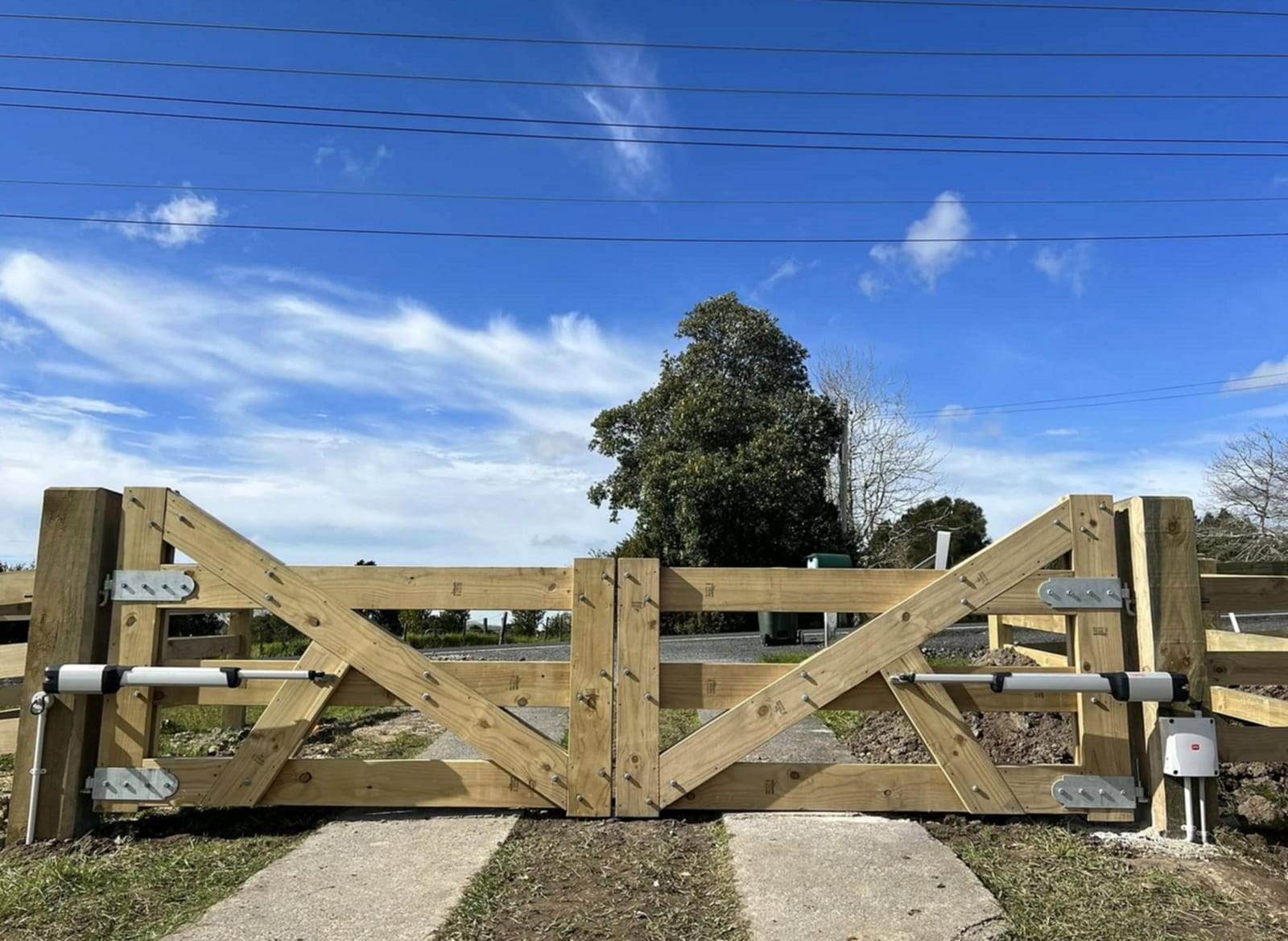
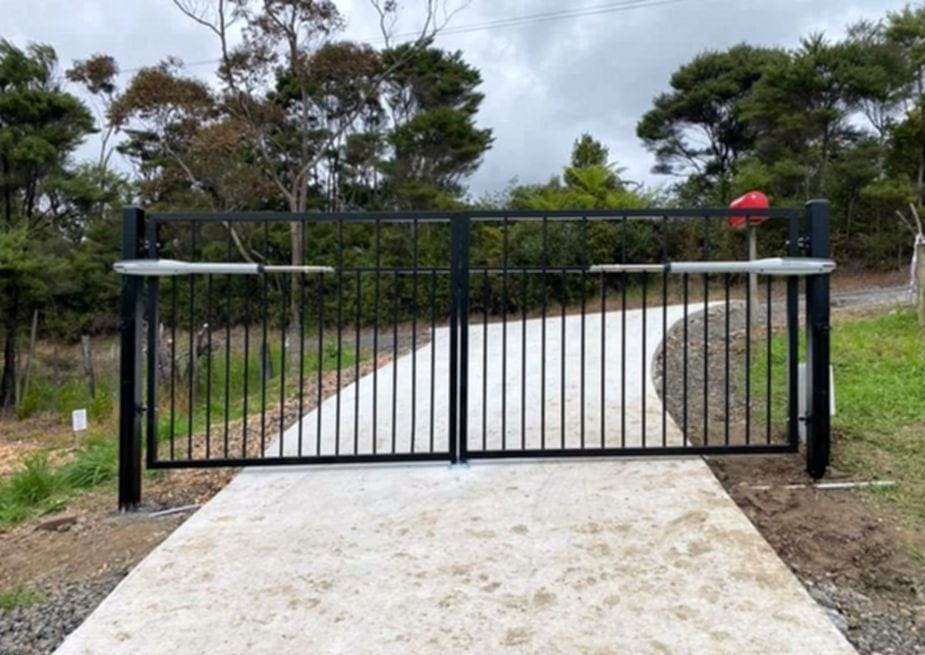
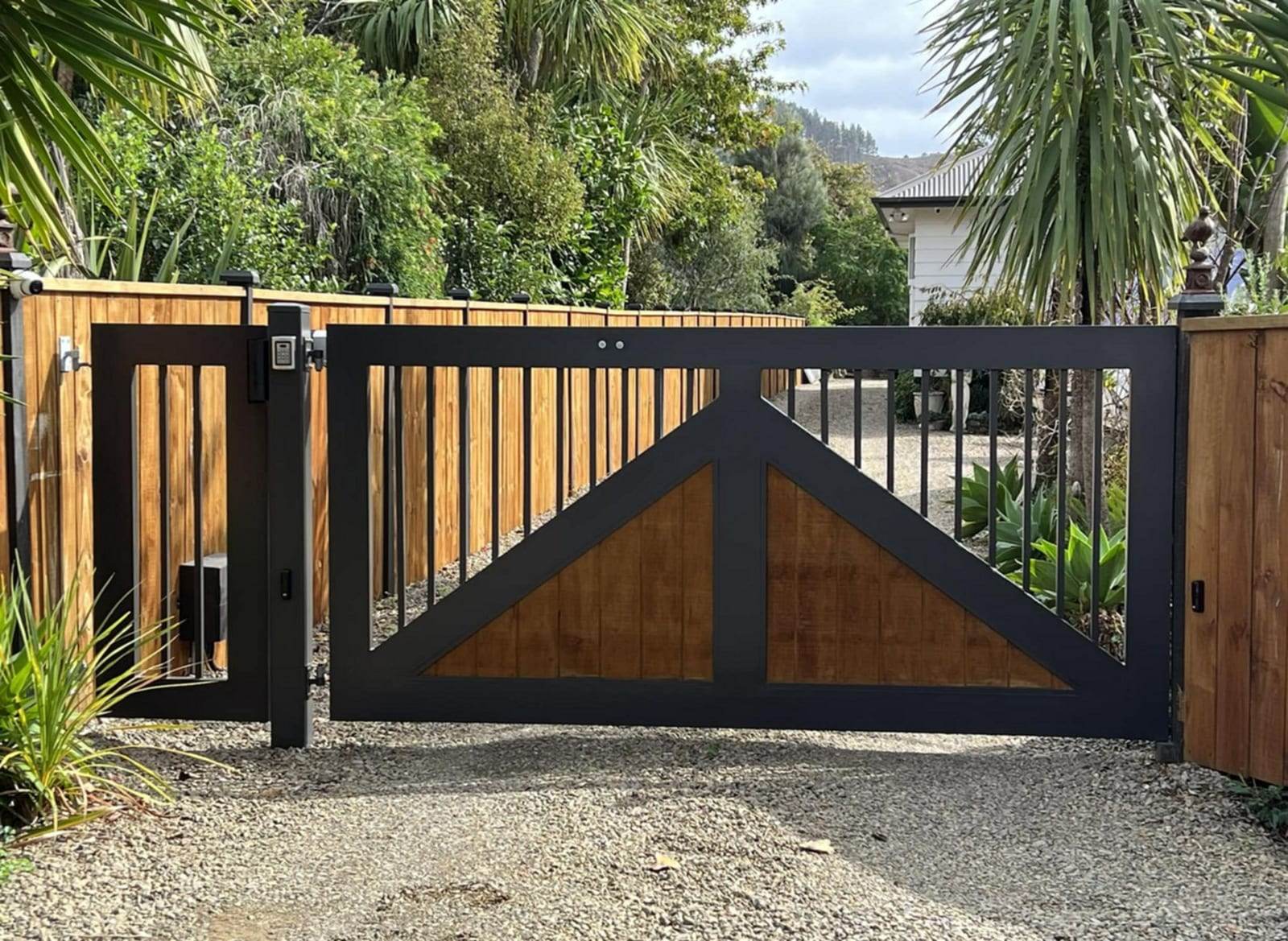
Types of gate operators
| Operator | Gate type | Good for | Notes |
|---|---|---|---|
| Linear (ram) arm | Swing | Most residential swing gates up to about 16 ft per leaf | Mounts on the post and the leaf; the most common and economical swing operator |
| Articulated arm | Swing | Gates hung on wide pillars or brick columns where a linear arm cannot reach the hinge line | Handles inward and outward opening; more moving parts to keep lubricated |
| In-ground (underground) | Swing | Ornamental gates where nothing visible on the gate is wanted | Needs a drained foundation box; higher cost, cleanest look |
| Slide operator | Sliding & cantilever | Any width, heavy gates, commercial entrances | Chain or rack drive; continuous-duty models for busy properties |
| Solar / low-voltage | Swing or slide | Rural driveways without power nearby, light use | Panel and battery must be sized for winter sun; see the FAQ |
How big an operator does your gate need?
Operators are rated by gate weight and length, and by how many times a day they run. Undersizing is the classic mistake: the gate works for a season, then the motor or gearbox gives up. Use the guide below to get a feel for what your gate needs, then we confirm it on site.
Gate opener sizing guide
Rough guidance to help you plan and ask the right questions. Final sizing is done on site — slope, wind exposure and the gate's condition matter as much as the numbers.
Access control options
| Device | What it does | Where it fits |
|---|---|---|
| Remotes | Open from the car; rolling-code transmitters that cannot be cloned easily | Every automated gate; multiple remotes per household or fleet |
| Keypad | Code entry for family, deliveries, contractors; temporary codes | Residential and commercial; mounted on a pedestal at car-window height |
| Intercom / phone entry | Visitor presses a button, you talk and buzz them in from the house or your phone | Homes with visitors and deliveries; apartment and business entrances |
| Card / fob readers | Tenants and staff tap to enter; lost fobs are cancelled, not re-keyed | Multi-tenant and commercial properties |
| Vehicle detection | Ground loops or wireless sensors open the gate for exiting cars and hold it open while a car is in the path | Any gate where cars leave without a remote; commercial gates |
| Key switch / emergency access | Manual override for staff; fire-department access (Knox box or siren sensor) | Commercial properties; some municipalities require it |
Safety: UL 325 and ASTM F2200
Automated gates are heavy machines that move on their own, and there are two standards that govern how they are built and installed. UL 325 covers the operator: since the 2016 revision, every gate operator must have at least two independent means of entrapment protection in each direction where a person could be caught, and the external devices must be monitored — the operator checks that its photo eyes and safety edges are connected and working before every move. ASTM F2200 covers the gate itself: picket spacing and guard screens so hands and heads cannot pass through, no protruding hardware in the travel path, rollers and hinges that do not create pinch points, and stops so a slide gate cannot leave its track.
| UL 325 class | Where it applies |
|---|---|
| Class I — residential | Gates serving one to four single-family homes |
| Class II — commercial / general access | Apartments (five or more units), hotels, retail and business parking, storage facilities |
| Class III — industrial / limited access | Factories, warehouses, loading docks and yards not intended for the public |
| Class IV — restricted access | Guarded or supervised entrances such as airport and prison perimeters |
In practice, every operator we install gets photo eyes across the opening, safety edges on the leading edge and pinch points, correct force and limit settings, a manual release, warning signs on both sides, and — for slide gates — mesh guards where the gate passes the post. We test each device with the gate moving before we leave.
Common opener problems
| Symptom | Where we look first |
|---|---|
| Nothing happens, no lights | Power, breaker, transformer, main fuse on the control board |
| Hums but does not move | Gate binding (ice, sag, roller), capacitor, clutch, motor |
| Opens but will not close | Photo eyes, safety edge, close-limit setting, hold-open timer |
| Stops partway or reverses | Force setting versus a stiff gate, limit drift, obstruction sensing |
| Remote range is poor | Antenna, receiver, battery, interference from nearby equipment |
| Works on battery only for seconds | Battery age, charger, cold-weather capacity |
Repairs are described on the gate repair page.
Power, batteries and solar in Northeast Ohio
The reliable way to power a gate is a dedicated circuit in conduit from the house or building — we lay it during installation so nothing is disturbed later. Battery backup keeps the gate working through outages and is standard on the operators we install. Solar works for lightly used gates when the panel and battery are sized for a Cleveland December; we will tell you honestly when a property is too shaded or too busy for it.
Gate opener questions
Which gate opener brands do you install and service?
We install operators from the established commercial and residential manufacturers and service most brands already in the field. Rather than pushing one brand, we match the operator to the gate: weight, width, cycles per day, power available and how cold it gets where it is mounted.
Will the gate still work in a power outage?
With a battery backup, yes — most residential operators will run a number of cycles on the battery, and every operator we install has a manual release so you can open the gate by hand. For properties where being locked in is not an option, we add a larger backup or a fail-open setting.
Is a solar gate opener realistic in Cleveland?
For a lightly used residential gate, yes, with an honest panel size and battery — our winters have short days and long cloudy spells, so the system has to be sized for December, not June. For busy or heavy gates we recommend running power.
Why does my gate reverse when nothing is in the way?
Almost always a safety device doing its job on bad information: photo eyes that are dirty, misaligned or blocked by snow or weeds, a damaged safety edge, or force settings that are too sensitive for a gate that has become stiff. We check the gate first, then the sensors, then the settings.