
Garage Door Services in Parma, Ohio
Repair, new doors, openers and commercial overhead doors, with the common door types and materials compared side by side.
Greenbriar Gates & Garage Doors looks after the whole life of a garage door: fixing the one you have, swapping a damaged section, putting in a new door or opener, and keeping all of it running through Northeast Ohio winters. Whether it is a single-car door on a detached garage or a row of overhead doors on a shop, the work starts the same way: find out what the door is doing and why, then fix that.
Repair, new doors, openers and commercial work
| Service | What it covers | Learn more |
|---|---|---|
| Garage Door Repair & Maintenance | Doors stuck open or shut, broken springs, frayed or snapped cables, doors off their tracks, worn rollers and noisy, jerky travel. Same-day service is common when a door will not close or a car is stuck inside.
| Door Repair » |
| New Garage Doors & Panels | Steel, insulated, wood-look, carriage-house and full-view doors fitted to your opening, plus replacement sections for a door that is otherwise sound.
| Installation » |
| Garage Door Openers | Chain, belt and wall-mount openers installed or repaired, with keypads, remotes, battery backup and the safety sensors set up and tested.
| Openers » |
| Commercial Overhead Doors | Sectional and rolling steel doors for shops, warehouses, storage buildings and business properties, with springs and operators sized for heavy daily use.
| Commercial » |
We also still take on gate repair and gate opener work as a smaller side service for customers who already know us: gate repair & gate openers.
Garage door types we work on
The right door depends on the house, the opening, the headroom above it and whether the garage is heated or shares a wall with living space. This is how the common designs compare:
| Door type | Best for | Keep in mind |
|---|---|---|
| Raised-panel sectional | Most homes: the classic look on ranches, bungalows and colonials, in single- and two-car widths. | Single-layer steel dents easily; the bottom section takes the most salt and slush. |
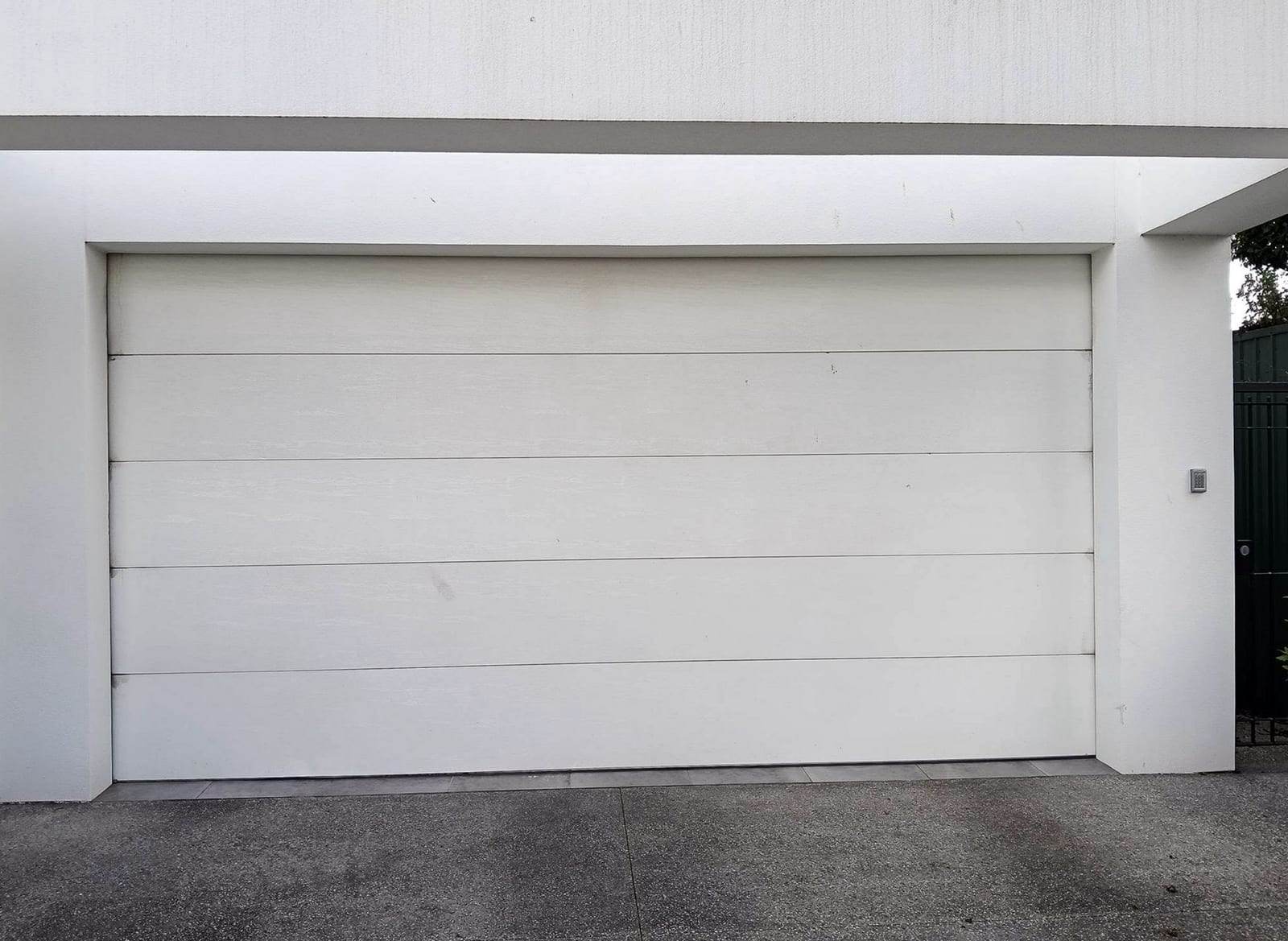
| Flush or long-panel sectional | Mid-century and modern houses; clean lines and woodgrain finishes. | Big flat panels show dents and waves more than raised panels do. |
| Carriage-house style | Older homes and new builds that want the look of swing-out doors with the convenience of an overhead door. | Overlays add weight, so springs and opener are sized to match. |
| Full-view (aluminum and glass) | Modern homes, workshops and showrooms that want daylight in the garage. | Glass makes the door heavy and lets heat out; privacy glass or insulated glass helps. |
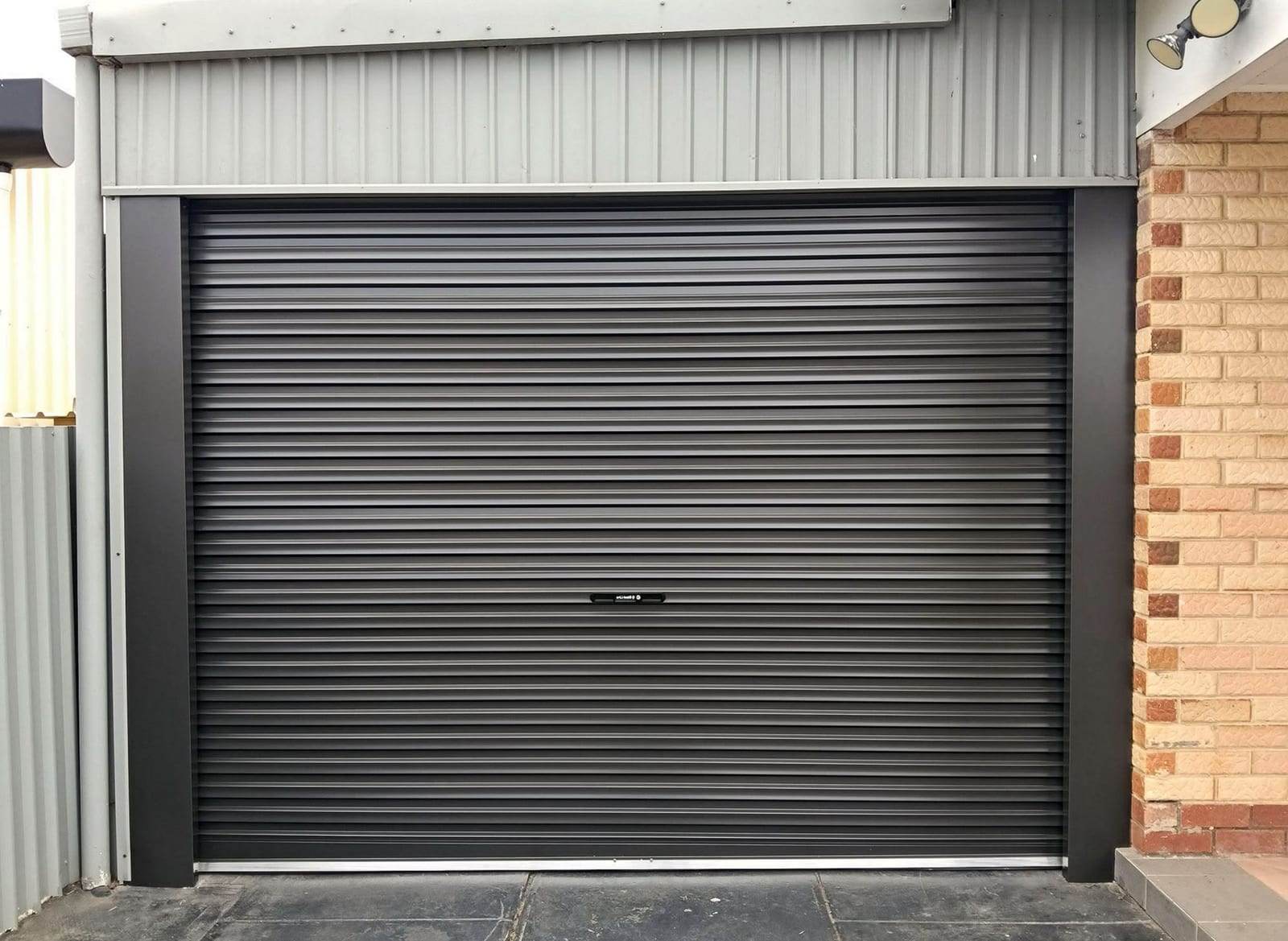
| Roll-up (rolling steel) | Sheds, outbuildings, commercial bays and openings with little room above them; the curtain coils above the opening. | Less insulation and more noise than a sectional door; the spring tension lives inside the barrel. |
Garage door materials compared
| Material | Look | Upkeep | Ohio winters | Weight |
|---|---|---|---|---|
| Steel, single layer | Raised or flush panels in many colors. | Low. Touch up scratches before rust starts. | Fine on a detached, unheated garage; no insulation. | Light. |
| Insulated steel | The same styles with a stiffer, quieter feel. | Low. | The pick for attached garages: warmer, quieter, and the panels resist dents. | Medium. |
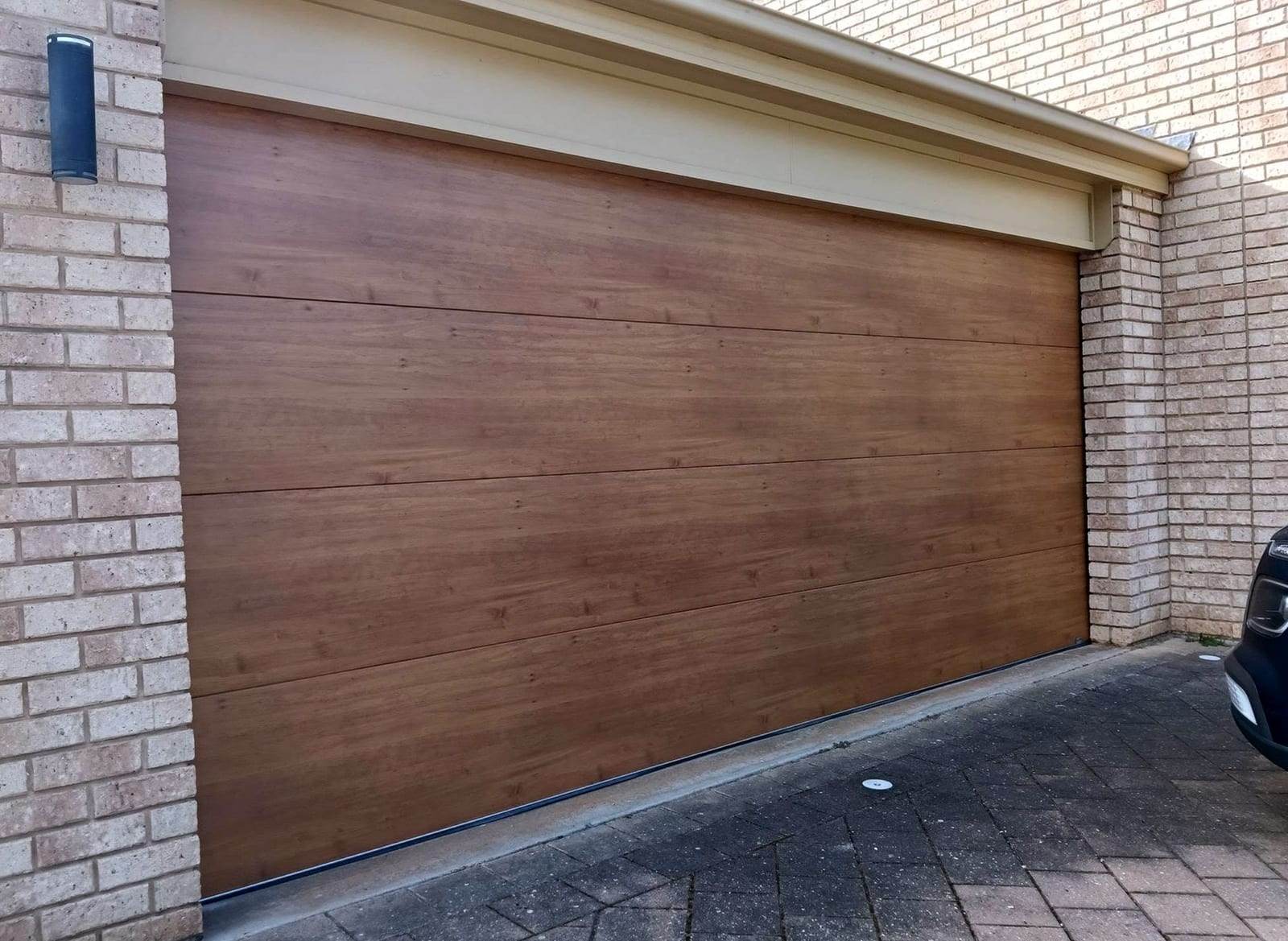
| Steel with a woodgrain or composite overlay | Looks like stained wood from the street. | Low. No refinishing. | Good. Does not swell, split or rot. | Medium to heavy. |
| Real wood | Warm, custom, carriage-house designs. | High. Refinish every couple of years. | Swells when wet; the bottom section rots without upkeep. | Heavy. |
| Aluminum and glass | Modern, full-view, lots of light. | Low. Clean the glass. | Frames do not rust; plain glass loses heat. | Medium to heavy. |
Residential and commercial work
For homeowners the job is usually one door: a spring that broke on a cold morning, a door knocked off its track, an opener that quit, or a new insulated door to replace one that has finally rusted along the bottom. Many of Parma's post-war bungalows and ranches have a detached single-car garage at the end of the drive, while newer subdivisions toward Strongsville and North Royalton tend to have attached two- and three-car garages that share a wall with the house — and that is where insulation and good seals pay for themselves.
Commercial customers — shops, warehouses, storage buildings, contractor yards and business properties — need overhead doors that open and close many times a day. Those jobs get high-cycle springs, operators sized for the duty, and inspections timed to how hard the doors work. See commercial overhead doors.
Same-day and emergency garage door service
A door that will not close leaves the garage — and often the house — open overnight; a door that will not open traps the car inside. Both are treated as urgent, and same-day service is common for them. Call (440) 732-4323, tell us what the door is doing, and you get a realistic arrival window. Evenings and weekends are covered — see our hours.
Planning a new door: four things to check first
- Measure the opening, width and height, and the headroom: the space between the top of the opening and the ceiling. Standard tracks want about 12 inches; less than that calls for low-headroom hardware.
- Look at the sides and the ceiling. The vertical tracks need a few inches of wall on each side, and the door needs a clear run along the ceiling about a foot and a half longer than the door is tall, more with an opener.
- Decide on insulation. Attached or heated garage: insulated steel. Detached, unheated garage: single-layer steel is often enough.
- Pick a look, then send us a note. We come out, measure and quote in writing. The process page explains what happens next.
Questions about doors, panels and side work
What is the most common garage door repair?
Springs. A torsion spring is made for a certain number of open-and-close cycles, and after years of daily use it eventually breaks — very often on a cold morning. Cables, rollers and openers come next, and doors knocked off their tracks are close behind. The repair page goes through each of them.
Can one damaged panel be replaced instead of the whole door?
Often, yes. Sectional doors are built from separate sections, so a section dented by a car or rusted through at the bottom can be swapped while the rest of the door stays. It depends on the manufacturer still making that panel design and color, which we check before quoting. When the panel is no longer made, or several sections are damaged, a new door is usually the better buy.
Do you still work on gates?
Yes, as a smaller side service for customers who already know us: gate repair and gate opener work. See gate repair & gate openers for what that covers.