
Garage Door Openers: Repair, Replacement & Accessories
Chain, belt and wall-mount openers, keypads, remotes, app control and battery backup — installed with the safety sensors lined up and the auto-reverse tested, and repaired when they act up.
An opener should be something you stop thinking about. Greenbriar Gates & Garage Doors installs and repairs garage door openers for homes and businesses around Parma, from a plain chain drive on a detached garage to a quiet wall-mount unit under a bedroom. Before any opener goes on, the door itself is checked: an opener is built to guide a balanced door, not to lift a heavy one, and a new opener on a door with tired springs only moves the problem somewhere else.
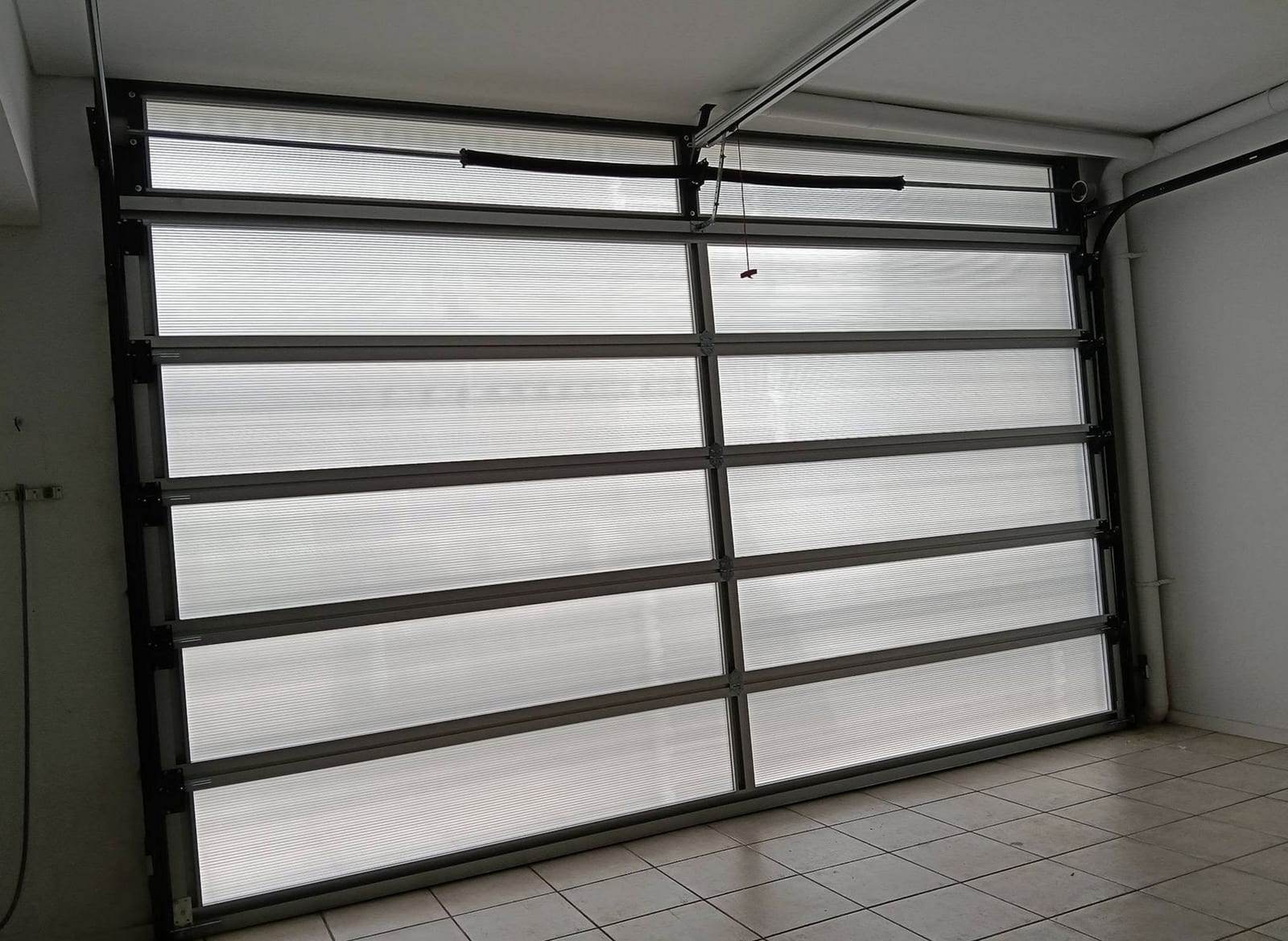
Types of garage door openers
| Opener | How it moves the door | Good for | Notes |
|---|---|---|---|
| Chain drive | A steel chain pulls a trolley along a ceiling rail | Detached garages, heavier doors, simple setups | Sturdy and economical; the loudest of the ceiling-mount types |
| Belt drive | A reinforced belt in place of the chain | Attached garages with bedrooms or living space above or beside them | Much quieter; the usual choice for attached garages |
| Screw drive | A threaded steel rod turns to move the trolley | Simple installations with few moving parts | Can be noisy, and stiff grease slows it on cold mornings |
| Wall-mount (jackshaft) | Mounts beside the door and turns the torsion shaft directly | Low ceilings, tall doors, garages where the ceiling should stay clear | Quiet; needs torsion springs and a little room beside the door |
| DC motor with battery backup | Any of the above with a DC motor and a backup battery | Homes where a power outage should not trap the car | Soft start and stop; the battery is a wear part |
How big an opener does your door need?
Openers are sold by motor class — 1/2, 3/4 and 1-1/4 horsepower or their DC equivalents — and by the size of door they are made for. A balanced door is light to move, but a two-car insulated or woodgrain door still asks more of an opener than a single steel door, and doors taller than 7 feet need a longer rail or a wall-mount unit. Use the guide below to get a feel for what your door needs, then we confirm it at the door.
Garage door opener sizing guide
Rough guidance to help you plan and ask the right questions. The final choice is made at the door: how well it is balanced, the headroom and the ceiling matter as much as the numbers.
Keypads, remotes and other accessories
| Device | What it does | Where it fits |
|---|---|---|
| Remotes | Open from the car; rolling-code remotes change their code with every press | Every opener; one for each driver |
| Outside keypad | Code entry for family, a dog walker or a neighbor; codes can be changed any time | Beside the door at hand height, clear of the door's path |
| Wall control | The button inside; many have a lock mode that shuts off remotes while you are away | Every opener, mounted at least 5 feet up and in sight of the door |
| App control | Open, close and check the door from a phone; an alert when it is left open | Busy households, and anyone who has driven off wondering |
| Battery backup | Keeps the opener running for a number of cycles during a power outage | Homes where storms knock the power out |
| Car buttons | Buttons built into many cars' mirrors or visors, programmed to the opener | Cars that have them; no remote clipped to the visor |
Safety sensors and the auto-reverse
Since 1993, residential garage door openers sold in the United States have had to include an outside safety system on top of the opener's own reverse — in practice two photo eyes mounted no more than about six inches above the floor on either side of the door. The safety standard behind it is UL 325. When we install or repair an opener, the photo eyes are mounted and aligned, the close force is set as low as the door allows, and the auto-reverse is tested by closing the door on a board laid flat on the floor. A door that does not reverse fails the test and is not left that way. An opener old enough to have no photo eyes should be replaced, not repaired.
Common opener problems
| Symptom | Where we look first |
|---|---|
| Nothing happens, no lights | Power at the outlet, a tripped GFCI or breaker, the logic board |
| Motor hums, door does not move | A broken spring or a locked door first, then a stripped gear or failed capacitor |
| Door goes down, then back up | Photo eyes, close-force and limit settings, a door that has gone stiff |
| Motor runs, door stays put | Emergency release pulled, a stripped gear, a broken chain or belt |
| Remote works only up close | Battery, antenna, lock mode, interference from some LED bulbs |
| Backup battery lasts only a cycle or two | Battery age; backup batteries wear out after a few years |
Repairs to the door itself are on the garage door repair page.
Power outages, cold weather and the opener
Every opener has an emergency release — the red cord hanging from the trolley — so the door can be opened by hand when the power is out, as long as the springs are good. A battery-backup opener keeps working through an outage, which matters on streets where winter storms take the power down. Cold is hard on openers too: grease stiffens, the door gets harder to move, and an opener whose force has been turned up to cope is hiding a problem rather than solving it. If the door slows down or stalls in the cold, the door and springs get looked at before the opener.
Garage door opener questions
Which opener brands do you install and service?
Rather than pushing one brand, we match the opener to the door: its weight and height, what is above and beside the garage, and whether you want a quiet drive, app control or battery backup. Most openers in local garages come from a handful of major manufacturers whose parts and remotes are easy to get, which keeps repairs simple.
Will the door still work in a power outage?
Every opener has an emergency release, so a door with good springs can be lifted by hand. A battery-backup opener goes further and keeps running for a number of cycles on its battery, which is worth having if a storm cutting the power would otherwise leave the car stuck inside.
Why does my door go back up when nothing is in the way?
Almost always a safety system doing its job on bad information: photo eyes that are dirty, bumped out of line or blocked by snow, a close-force setting too sensitive for a door that has become stiff, or a limit setting that has drifted. We check the door first, then the sensors, then the settings.
Can I add app control to the opener I have?
Often, yes. Many recent openers have Wi-Fi built in, and add-on kits work with a lot of older ones that already have photo eyes. If the opener is near the end of its life, the money usually goes further on a new opener with it built in.