
Garage Door Repair in Parma, OH
Broken springs, frayed and snapped cables, doors off their tracks, worn rollers and hinges, damaged sections and openers that quit — with same-day service common when a door is stuck.
Repair calls are most of what we do. Around Parma they follow the weather: on the first frigid mornings it is springs that snap and doors frozen to the slab, after a wet spring it is rusty bottom sections and frayed cables, and all year long it is doors bumped off their tracks and openers that quit. Greenbriar Gates & Garage Doors works through a door in order — balance and springs, cables, rollers and track, then the opener — so you pay for the fix the door actually needs.
Problems we fix
| What you notice | Usual cause | What we do |
|---|---|---|
| A loud bang, then the door will not lift or feels very heavy | Broken torsion or extension spring | Replace the springs, set the tension, balance the door |
| Door hangs crooked, cable slack or off its drum | Frayed or snapped lift cable, worn bottom bracket | New cables and brackets, re-wind on the drums, level the door |
| Door off its track or jammed at an angle | A bump from a car, worn rollers, loose track, a cable that let go | Secure the door, re-hang the sections, replace bent track and rollers |
| Grinding, squealing or jerky travel | Worn rollers, dry bearings, cracked hinges, track out of line | New rollers and hinges, lubrication, track alignment |
| Dented, cracked or rusted section | Impact damage, salt and meltwater at the bottom | Replace the section where the panel is still made, new bottom seal |
| Door will not close, or goes back up | Photo eyes blocked or out of line, drifted limits, a stiff door | Align the eyes, reset limits and force, fix the door first |
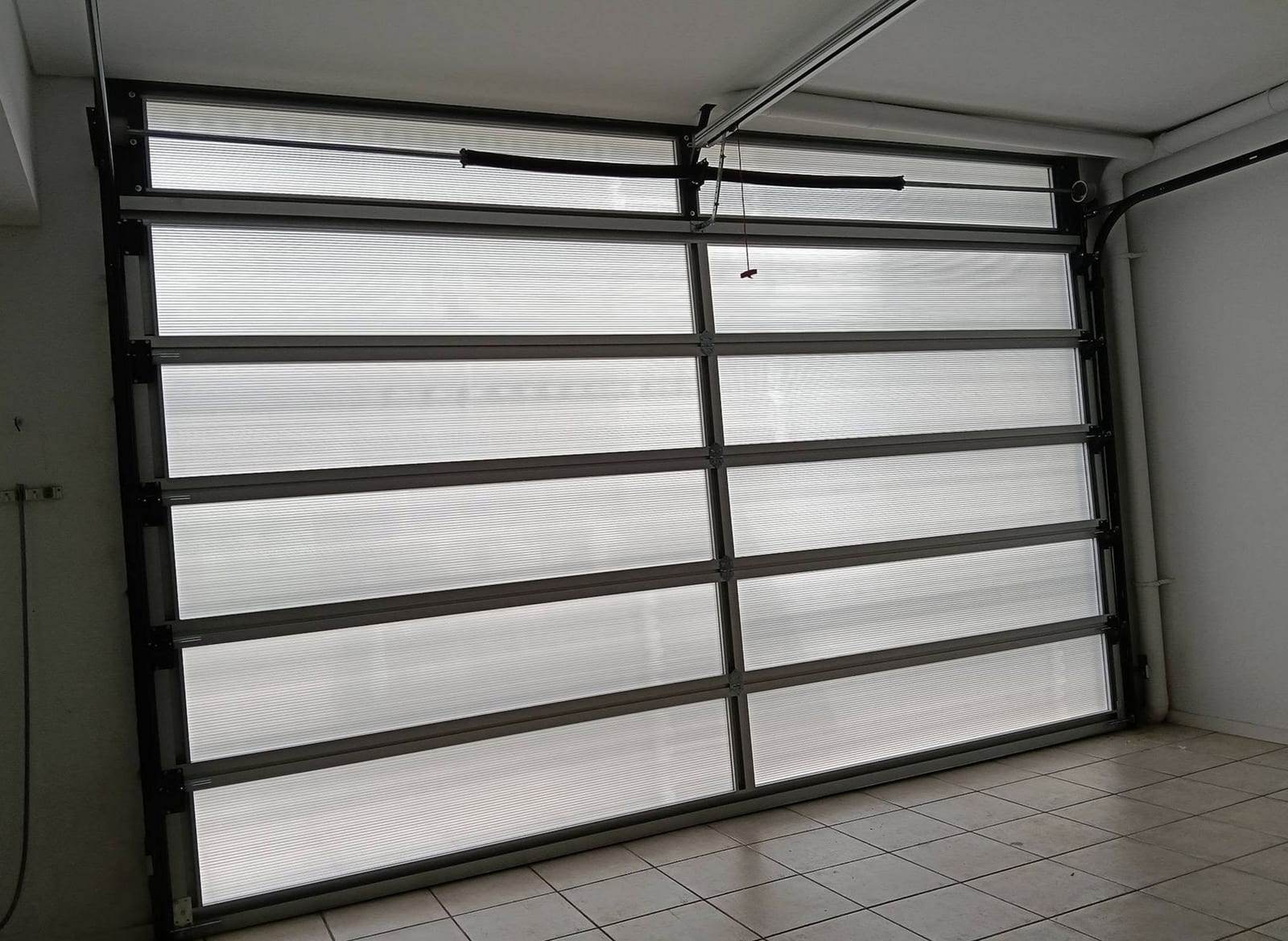
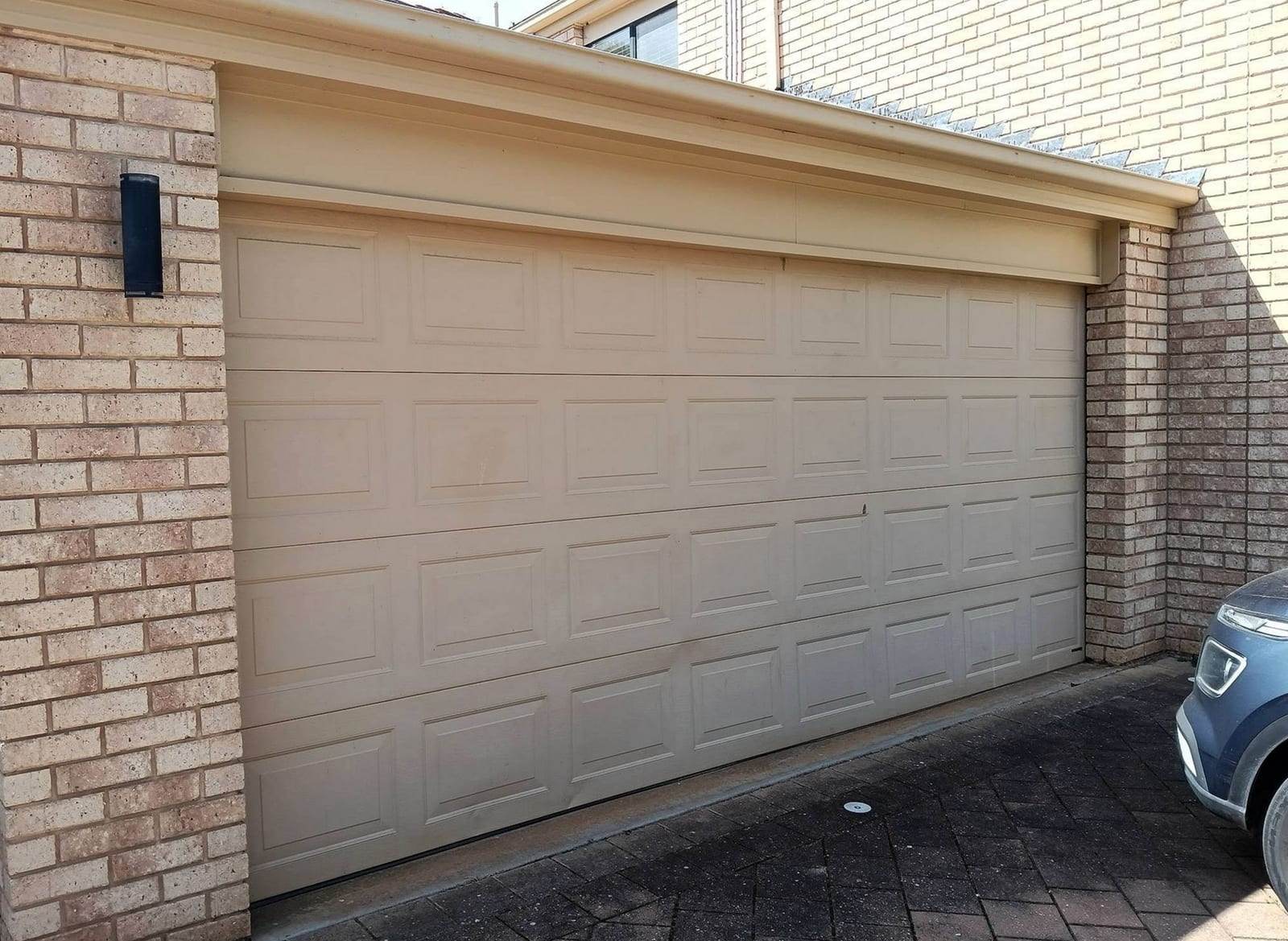
Broken spring replacement
Torsion springs sit on a steel shaft above the door; extension springs stretch alongside the horizontal tracks on older and lighter doors. Either way the springs carry the weight of the door, and the opener only guides it. A standard torsion spring is rated for about 10,000 open-and-close cycles — roughly seven years for a door used four times a day — and cold steel lets go more easily, which is why so many break on winter mornings. We fit springs sized to the weight of your door, usually both at once on a two-spring door, then set the tension so the door stays put halfway up and the opener is not straining. Extension springs get a safety cable through the middle so a broken spring cannot whip across the garage. Spring winding is not a do-it-yourself job: a wound spring holds enough energy to break bones.
Cables and off-track doors
Lift cables run from the bottom brackets up to drums on the spring shaft. When one frays, rusts through or slips off its drum, the door hangs crooked and binds in the track. Off-track doors usually start with a car nudging the door, a worn roller popping out, or a cable letting go. We secure the door first, release the spring tension safely, re-hang the sections, replace bent track, rollers and cables, and check that both sides lift evenly before the opener is reconnected.
Rollers, hinges, tracks and sections
Old steel rollers flat-spot and grind, their bearings dry out, and the door starts to jerk and squeal; sealed-bearing nylon rollers run quieter and need little grease. Hinges crack at the section joints, track brackets work loose, and the bottom section of a steel door takes the brunt of road salt and meltwater in Northeast Ohio. We replace worn rollers and hinges, re-fasten and align the tracks, swap a dented or rusted section when the manufacturer still makes it, and fit a new bottom seal so the door closes tight on an uneven slab.
Opener repairs
When the door itself is sound and the opener is the problem, we work through it in order: power at the outlet, the safety sensors and their wiring, the wall control and remotes, the limit and force settings, then the motor, gears and logic board. Plenty of calls end at a sensor knocked out of line or a stripped drive gear. New openers and the accessories that go with them are on the garage door openers page.
Maintenance and seasonal tune-ups
A door that gets looked at once or twice a year rarely turns into an emergency call. A tune-up covers the items below; busy commercial doors need it more often, which the commercial page explains.
| Season | What gets checked |
|---|---|
| Spring | Wash winter salt off the bottom section and hardware, check the bottom seal and the slab, test the balance and the auto-reverse. |
| Summer | Lubricate rollers, hinges and springs, tighten track brackets and hinge bolts, look over the cables for fraying. |
| Fall | Check spring wear before the cold sets in, replace a cracked bottom seal, test the opener's battery backup, re-align the photo eyes. |
| Winter | Keep ice off the strip of floor where the door lands and snow away from the photo eyes; a door that slows down in the cold is worth a call. |
Quick troubleshooter: what is your door doing?
A few things worth checking before you call — and what they usually mean when we arrive.
Door will not open, and the opener hums or strains
Check first: did you hear a loud bang earlier? Look at the spring above the door for a gap in the coils. Also check that the manual lock bar on the inside of the door is not engaged.
Usual causes: a broken spring by a wide margin, then a locked door or a stripped opener gear. Stop pressing the button: an opener pulling against a door it cannot lift wears itself out.
Door starts down, then goes back up
Check first: the two photo eyes near the floor. Are both lights on and steady? Is a lens dirty, bumped out of line, or blocked by a bin, a bike or a drift of snow?
Usual causes: blocked or misaligned eyes, a close limit or force setting that has drifted, or a door that has become stiff enough to trip the auto-reverse.
Door hangs crooked, or one side is lower
Check first: look at the cables on both sides. Is one slack, frayed or off its drum at the top? Is a roller out of the track?
Usual causes: a broken or slipped lift cable, a broken spring on one side, or a door knocked off its track. Do not run the opener on a crooked door: it can bend sections and pull them apart.
Door is loud: grinding, squealing or rattling
Check first: where the noise comes from as the door moves: the rollers and hinges, the springs, or the opener.
Usual causes: worn steel rollers with dry bearings, cracked hinges, loose track bolts, or springs that need oil. One sudden bang, on the other hand, is usually a spring breaking.
Remote works only up close, keypad does nothing
Check first: the remote battery, whether the wall control is in "lock" mode, and whether the keypad lights up at all.
Usual causes: weak batteries, a damaged antenna on the opener, interference from some LED bulbs in the opener light, or remotes that need to be programmed again after a power outage.
Door works in summer, struggles in winter
Check first: whether the bottom seal is frozen to the floor, and whether the door slows down or stops partway on cold mornings.
Usual causes: old grease that stiffens in the cold, a seal stuck in ice, or a tired spring that only shows its weakness when the steel is cold. A fall tune-up heads most of this off.
Safety note: if a spring has broken or a cable has come off, leave the door where it is. Pulling the emergency release on an open door with a broken spring can let it drop suddenly. Keep people and cars clear of it and call.
What a repair visit looks like
- You call or send the form. We ask what the door is doing; a photo sent by email helps us bring the right parts.
- We arrive in the window we gave you. Where it is safe, the opener is disconnected and the door lifted by hand first, because that separates spring and track problems from opener problems in a minute.
- You get a price before the work starts. If we find something else along the way, we explain it and you decide.
- We test it with you — full cycles, the auto-reverse, remotes and keypad — and show you where the emergency release is.
Garage door repair questions
Do you repair doors you did not install?
Yes. Who installed the door makes no difference to a repair; what matters is its condition and whether parts for it are still available. Springs, cables, rollers, hinges and seals are standard parts, and openers can be repaired or replaced whatever their age.
Should both springs be replaced when only one broke?
On a two-spring door, usually yes. Both springs have made the same number of cycles, so the second one is close behind the first. Replacing them as a pair keeps the door balanced and saves a second visit a few months later. We explain it either way and you decide.
How much does a garage door repair cost?
It depends on the part and the door, so we quote before we start rather than publishing numbers that would not apply to your door. A sensor or roller fix is a small job; springs and cables take longer; a damaged section depends on whether the manufacturer still makes that panel. You hear the price, and why, before any work starts.
Can you come the same day?
Same-day service is common for anything urgent, especially in Parma, Parma Heights, Seven Hills, Brooklyn and the neighboring suburbs. Call early with a description of the problem. A door stuck open or shut, or a car trapped inside, is treated as urgent.